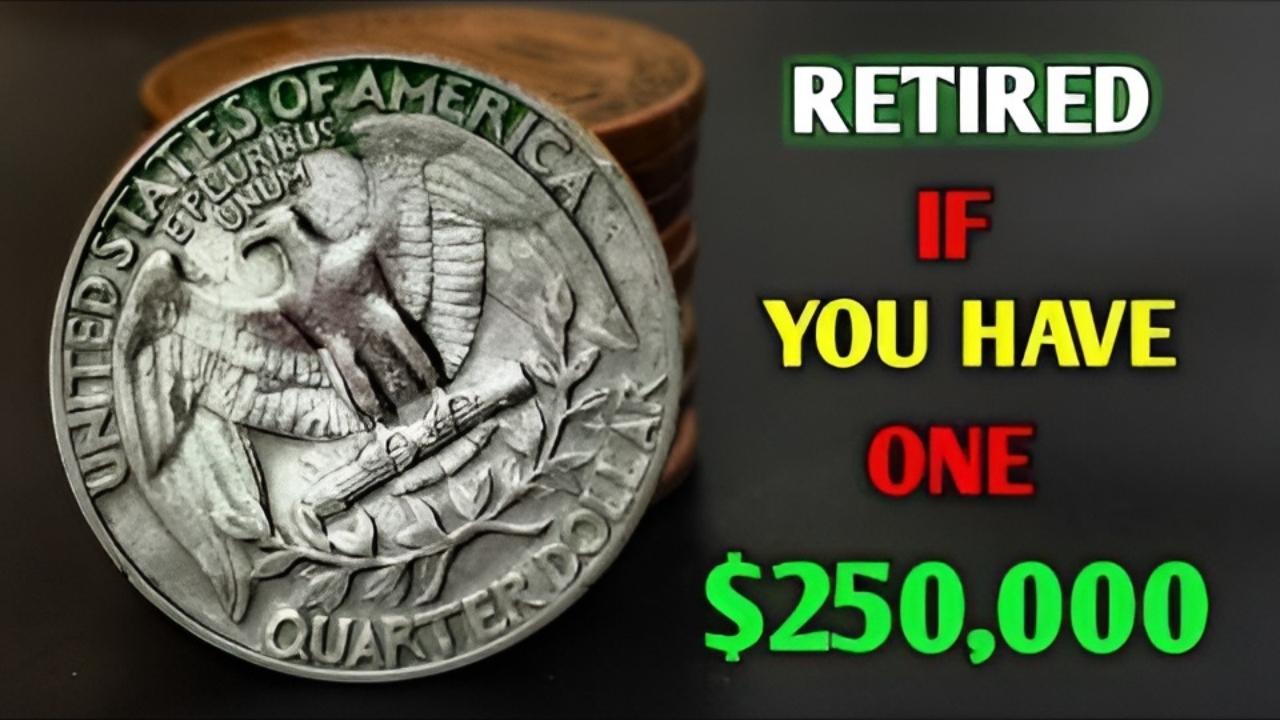
Top 10 Rare Quarters Worth Over $250,000: Quarters are among the most familiar coins in American pockets, yet hidden within their history are extraordinary rarities that command values far beyond their face. Some of these coins have sold for more than $250,000 at auction, making them treasures of numismatic lore. Collectors prize them for their scarcity, minting quirks, and the stories they tell about the evolution of the United States Mint. This article explores ten of the most valuable quarters, weaving together their background, rarity, and the reasons they fascinate collectors.
1796 Draped Bust Quarter
The 1796 Draped Bust Quarter holds the distinction of being the very first quarter ever minted in the United States. Only 6,146 pieces were struck, and survival rates are low. Its design features Liberty with flowing hair on the obverse and a small eagle on the reverse. Collectors view it not only as a coin but as a piece of national heritage. High‑grade examples have sold for well over $250,000, and even worn specimens are highly sought after.
1823/2 Overdate Quarter
This coin is famous for its overdate error, where the numeral “3” was struck over a “2.” The rarity of this issue is extreme, with only a handful known today. The overdate reflects the Mint’s practice of repurposing dies, a common but risky method in the early 19th century. Collectors prize it for its unique anomaly and historical charm. Auction prices for pristine specimens have exceeded $250,000, cementing its place among the most valuable quarters.
1870‑CC Liberty Seated Quarter
Minted in Carson City, Nevada, the 1870‑CC Liberty Seated Quarter is one of the rarest issues from the Carson City Mint. Fewer than ten examples are known to exist. The Carson City Mint itself is legendary, producing coins tied to the silver boom of the American West. Owning an 1870‑CC quarter is akin to holding a relic of frontier history. Its scarcity and historical significance push its value well beyond $250,000, with collectors fiercely competing whenever one surfaces.
1901‑S Barber Quarter
The 1901‑S Barber Quarter is considered the key date in the Barber series. With a mintage of only 72,664, it is extremely difficult to find in high grades. Mint‑state examples have sold for prices surpassing $250,000. The Barber design, named after engraver Charles E. Barber, was once criticized for its simplicity, yet today collectors cherish it. The 1901‑S stands out as the crown jewel of the series, a coin that every serious collector dreams of owning.
1916 Standing Liberty Quarter
The 1916 Standing Liberty Quarter is one of the most famous U.S. coins due to its low mintage of just 52,000. Its design, by Hermon A. MacNeil, depicts Liberty standing with a shield and olive branch, symbolizing both defense and peace. Collectors seek this coin for its beauty and rarity. High‑grade examples regularly command values above $250,000. The coin also sparked controversy at the time due to Liberty’s exposed breast, leading to a design modification in later years.
1932‑D Washington Quarter
The Washington quarter series began in 1932 to commemorate George Washington’s 200th birthday. The 1932‑D is one of the rarest issues, with a mintage of only 436,800. While many circulated, finding one in uncirculated condition is extremely difficult. Exceptional specimens have crossed the $250,000 threshold at auction. Collectors value it as both a key date and a symbol of the enduring Washington design that continues today.
1932‑S Washington Quarter
Similar to the 1932‑D, the 1932‑S Washington Quarter is another key rarity. With a mintage of 408,000, it is scarce in mint condition. Collectors pay top dollar for pristine examples, often exceeding $250,000. Together, the 1932‑D and 1932‑S form the cornerstone of Washington quarter collecting, representing the beginning of a series that has become a fixture in American coinage.

1943‑S Silver Washington Quarter Error
During World War II, most quarters were struck in standard compositions, but rare minting errors occurred. The 1943‑S Silver Washington Quarter with unique error varieties has been valued at over $250,000 in top condition. These errors highlight the challenges faced by the Mint during wartime, when resources were stretched and mistakes occasionally slipped through. Collectors treasure such anomalies, seeing them as windows into history.
This coin features a rare overmintmark error where a “D” mintmark was struck over an “S.” Such anomalies are highly prized by collectors because they reveal the human element of coin production. High‑grade examples have fetched prices above $250,000. The overmintmark adds intrigue, making the coin not just a piece of currency but a story of minting practices and their occasional imperfections.
1970‑S Proof Washington Quarter Struck on Canadian Planchet
One of the most unusual mint errors, this coin was struck on a 1941 Canadian quarter planchet. Its bizarre origin and rarity make it a collector’s dream. Auction records show values exceeding $250,000. The coin is a reminder that even in modern times, mistakes can occur, producing rarities that captivate collectors. Its story blends international coinage with American minting, creating a unique hybrid that fascinates numismatists.
The Thrill of the Hunt
The allure of rare quarters lies not only in their value but in the thrill of discovery. Imagine finding a coin worth hundreds of thousands of dollars in your pocket change. While the odds are slim, stories of remarkable finds continue to inspire collectors. Checking your change becomes more than routine; it becomes a treasure hunt.

Collecting as a Journey
Collecting rare quarters is not just about wealth. It is about history, artistry, and connection to the past. Each coin tells a story of its time, from the fledgling days of the Republic to the challenges of wartime production. Collectors often describe their pursuit as a journey, one that deepens their appreciation for American heritage.
Conclusion
Finding one of these rare quarters in your change is like winning the lottery. Each coin embodies a chapter of American history, minting practices, and the quirks of coin production. While the odds are slim, the thrill of discovery keeps collectors and enthusiasts searching. Always check your change carefully—you never know when a small coin might hold a fortune.