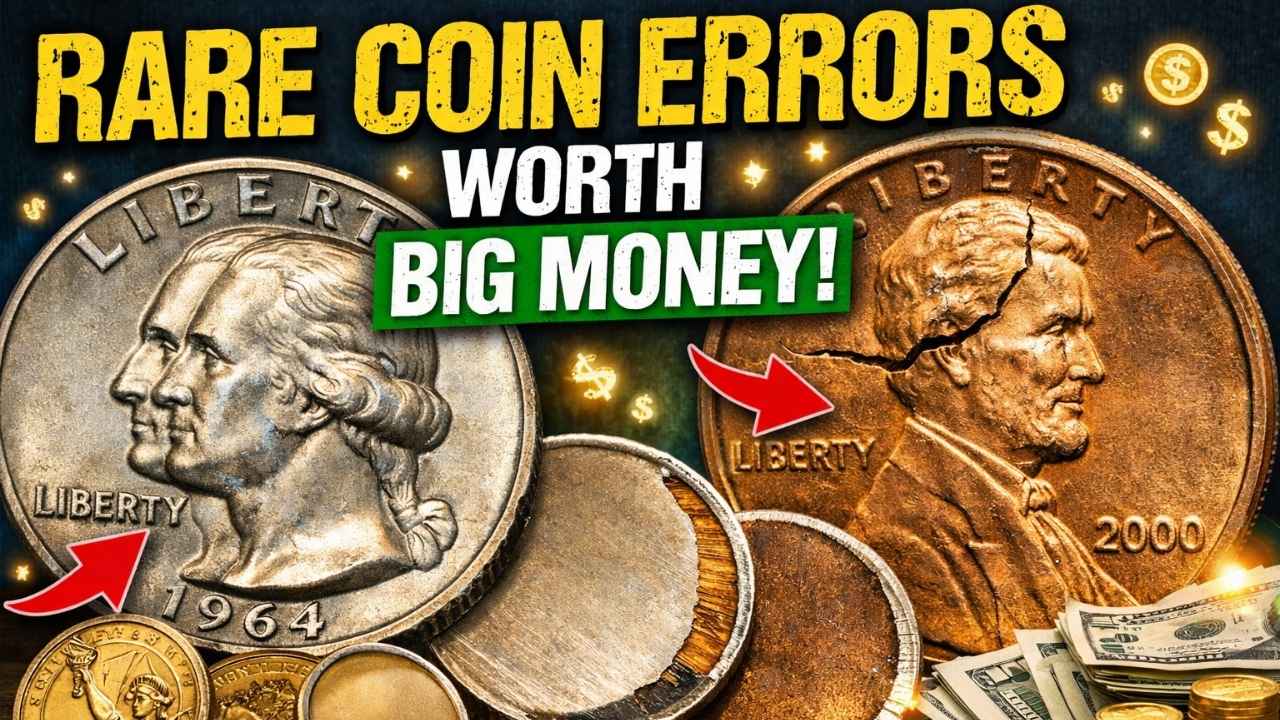
Top 10 Rare Coin: Coin collecting is full of surprises, and some of the most fascinating treasures are not the coins that were intentionally designed but those that slipped through the cracks of minting. Rare coin errors are anomalies created during production, and they can transform ordinary coins into extraordinary collectibles worth thousands or even millions of dollars. From doubled dies to off‑metal strikes, these mistakes capture the imagination of collectors and investors alike. This article explores ten of the most valuable coin errors, their stories, and why they command such high prices.
1955 Double Die Lincoln Cent
Perhaps the most famous error coin in American history, the 1955 Double Die Lincoln Cent is instantly recognizable. The doubling of the date and inscriptions on the obverse is so dramatic that even casual observers notice it. Thousands entered circulation before the error was discovered, and collectors quickly realized its significance. Today, mint‑state examples can sell for more than $100,000, and even circulated pieces are highly prized.
1969‑S Double Die Lincoln Cent
Another dramatic doubling error, the 1969‑S Double Die Lincoln Cent features bold doubling on the obverse, especially in the inscriptions. Initially suspected to be counterfeit, genuine examples were later authenticated and became legendary. With only a handful known, values have soared past $250,000. Its rarity and striking appearance make it one of the most desirable modern error coins.
1972 Double Die Lincoln Cent
The 1972 Double Die Lincoln Cent is less rare than the 1955 or 1969‑S, but its doubling is still dramatic and easily visible. Collectors prize it for its accessibility compared to rarer double dies. High‑grade examples can sell for tens of thousands of dollars, and it remains a favorite among enthusiasts who enjoy spotting errors with the naked eye.
1943 Copper Penny
During World War II, pennies were struck in steel to conserve copper for the war effort. However, a few copper planchets were mistakenly used, creating the legendary 1943 Copper Penny. Only a handful exist, and one sold for $2.3 million. This error coin is among the most famous in American history, proving that a simple mistake can create a multimillion‑dollar treasure.
1944 Steel Penny
In 1944, the Mint returned to copper planchets, but a few leftover steel blanks from 1943 were accidentally used. The 1944 Steel Penny is extremely rare, with fewer than 30 known. Auction prices have exceeded $250,000, and its rarity makes it one of the most valuable error coins ever produced.

1970‑S Proof Quarter Struck on Canadian Planchet
One of the most unusual errors, this coin was struck on a 1941 Canadian quarter planchet. Its bizarre origin and rarity make it a collector’s dream. Auction records show values exceeding $250,000. The coin is a reminder that even in modern times, mistakes can occur, producing rarities that captivate collectors.
2000 Sacagawea Dollar with Washington Quarter Reverse
Known as the “Mule” error, this coin features the obverse of a Sacagawea dollar paired with the reverse of a Washington quarter. Only a few dozen are known, and they have sold for prices ranging from $100,000 to $200,000. The error occurred when dies from two different coin series were accidentally paired together, creating one of the most famous modern mint mistakes.
1999 Wide AM Lincoln Cent
Most Lincoln cents from 1999 feature the letters “AM” in “America” close together, but a rare variety shows them spaced widely apart. This error occurred when a proof die was mistakenly used for circulation strikes. Collectors prize the Wide AM variety, and high‑grade examples can sell for thousands of dollars.
1982 No Mint Mark Roosevelt Dime
In 1982, the Philadelphia Mint accidentally released dimes without a mint mark. Normally, coins struck in Philadelphia carried a “P” mint mark beginning that year, but a small number were produced without it. These dimes are rare and valuable, with high‑grade examples selling for thousands of dollars.

2007 Presidential Dollar Missing Edge Lettering
The Presidential dollar series introduced edge lettering with the year, mint mark, and motto. In 2007, some coins were released without this lettering, creating a striking error. Collectors quickly dubbed them “Godless Dollars” because the motto “In God We Trust” was missing. Values for these coins can reach thousands of dollars, depending on condition and rarity.
The Fascination with Error Coins
Error coins captivate collectors because they represent the unexpected. They are tangible reminders that even in highly controlled processes, mistakes happen. Each error tells a story of human oversight, mechanical failure, or unusual circumstances at the Mint. Collectors cherish them not only for their value but for their uniqueness.
The Thrill of Discovery
The idea that a coin worth thousands could be hiding in pocket change excites collectors and casual finders alike. While the odds are slim, stories of remarkable discoveries continue to inspire. Checking your change becomes more than routine; it becomes a treasure hunt.
Conclusion
Rare coin errors prove that mistakes can be worth fortunes. From the 1955 Double Die Lincoln Cent to the 1943 Copper Penny that sold for $2.3 million, these coins embody the allure of numismatics. They remind us that even the smallest oversight can create a masterpiece of rarity. Collectors will continue to seek them, driven by the thrill of discovery and the knowledge that history sometimes hides in plain sight.